Sleep is one of the most critical yet often neglected aspects of health. In our busy lives, it’s easy to sacrifice sleep without realizing the cost to our mind, body, and overall well-being. Quality sleep affects everything—from mood and focus to immunity, metabolism, and long-term health.
Understanding why sleep matters and using tools like a Sleep Calculator can help you get the rest your body needs, improve energy, and boost your daily performance.
Top 5 Benefits of Quality Sleep
Getting enough rest isn’t a luxury—it’s essential. Here’s why:
1. Sleep Helps Your Body Repair and Recover
During sleep, your body rebuilds muscles, repairs tissues, and strengthens the immune system. Think of it as your nightly maintenance routine—without it, recovery slows down, and health issues can arise.
2. Enhances Mental Clarity and Focus
A well-rested brain is sharper. Sleep improves memory, problem-solving, decision-making, and creativity. After quality rest, tasks feel easier, and focus improves naturally.
3. Supports Emotional Balance
Sleep acts as a reset button for your emotions. Lack of sleep increases irritability, stress, and anxiety, while consistent rest helps you stay calm and emotionally stable.
4. Fortifies Your Heart and Immune System
Good sleep lowers the risk of heart disease, supports hormone regulation, and strengthens immune function. Poor sleep, on the other hand, increases vulnerability to infections and chronic conditions.
5. Maintains a Healthy Weight
Sleep regulates hunger hormones—ghrelin and leptin. Without proper rest, cravings for sugar and high-calorie foods increase, metabolism slows, and overeating becomes more likely.
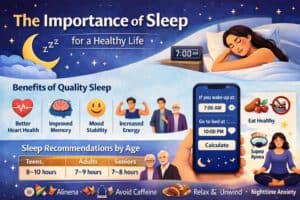
Recommended Sleep Hours by Age
Sleep needs vary across age groups. Here’s a simple guide:
| Age Group | Recommended Sleep Hours |
|---|---|
| 0–3 years | 14–17 |
| 4–12 years | 9–12 |
| 13–17 years | 8–10 |
| 18–64 years | 7–9 |
| 65+ years | 7–8 |
Tip: Use our Age Calculator to see your exact recommended sleep hours.
How a Sleep Calculator Can Improve Your Sleep
A Sleep Calculator helps you plan sleep cycles, wake up refreshed, and avoid sleep debt. It’s simple and personalized:
Benefits of Using a Sleep Calculator
Personalized Sleep Recommendations: Tailored to your age, lifestyle, and health.
Consistency: Helps maintain a regular sleep schedule, even on weekends.
Track Sleep Cycles: Understand light, deep, and REM sleep for optimal rest.
Avoid Sleep Debt: Prevent cumulative sleep loss that affects mood and performance.
Try our Sleep Calculator now and discover the ideal bedtime for your lifestyle.
Why Sleep, Diet, and Calories Are Linked
Your diet and calorie intake directly affect your sleep quality. Overeating or under-fueling can disrupt sleep cycles, making it harder to rest fully.
How a Calorie Calculator Helps
Track your daily calorie intake
Align your meals with your energy needs
Support healthy sleep patterns
By pairing your sleep routine with proper nutrition, you enhance both physical and mental health.
Quick Tips for Better Sleep Tonight
Stick to a Schedule: Sleep and wake up at the same time daily.
Avoid Heavy Meals Before Bed: Eat lighter, balanced dinners.
Limit Screen Time: Reduce blue light exposure 1 hour before bed.
Create a Sleep-Friendly Environment: Cool, dark, and quiet bedrooms help.
Use Tools: Combine Sleep, Age, and Calorie Calculators for optimal results.
How to Get Better Sleep Naturally
Getting better sleep doesn’t always require medications or supplements. Small lifestyle changes can make a big difference.
Tips for Better Natural Sleep
Stick to a consistent schedule: Go to bed and wake up at the same time every day, including weekends.
Create a relaxing bedtime routine: Reading, light stretches, or meditation can signal your body it’s time to sleep.
Optimize your sleep environment: Keep the room cool (65–70°F / 18–21°C), dark, and quiet. Blackout curtains or a white noise machine can help.
Limit caffeine and alcohol: Avoid caffeine after 2 PM and limit alcohol; it disrupts REM sleep.
Light exposure during the day: Natural sunlight during the day helps regulate your body clock.
Use your Sleep Calculator: Calculate your ideal bedtime based on wake-up time and sleep cycles for optimal rest.
Quick Tip: Avoid heavy meals 2–3 hours before bed. Light snacks like almonds, cherries, or oatmeal can promote better sleep naturally.
Common Sleep Mistakes That Are Ruining Your Rest
Many people struggle with sleep without realizing daily habits are the culprit.
Top Sleep Mistakes
Irregular sleep schedules: Changing bedtime drastically confuses your body clock.
Screen time before bed: Blue light from phones and TVs suppresses melatonin, making it harder to fall asleep.
Too much caffeine or sugar: Can cause restlessness and nighttime waking.
Over- or under-sleeping: Oversleeping can disrupt natural rhythms; under-sleeping leads to sleep debt.
Ignoring sleep problems: Snoring, insomnia, or restless legs can be signs of deeper issues.
Solution: Track your sleep patterns using our Sleep Calculator to identify disruptions and adjust your routine.
Understanding Sleep Cycles: REM, Deep Sleep & Light Sleep
Sleep isn’t just about hours—it’s about cycles. Knowing how they work helps you maximize rest.
Sleep Stages
| Stage | Duration | Purpose |
|---|---|---|
| Light Sleep | 50–60% of night | Body relaxes, brain processes memory |
| Deep Sleep | 10–20% of night | Physical recovery, tissue repair, immune support |
| REM Sleep | 20–25% of night | Dreaming, memory consolidation, emotional regulation |
Why It Matters: Waking up mid-cycle can leave you groggy. Sleep Calculators help you wake at the end of a full cycle, improving morning energy.
Sleep and Weight: How Rest Affects Metabolism
Sleep directly affects hormones that regulate appetite, metabolism, and energy. Poor sleep can make weight management harder.
The Science
Ghrelin: Hunger hormone ↑ when sleep is low → more cravings
Leptin: Fullness hormone ↓ when sleep is low → less satiety
Insulin sensitivity: Poor sleep reduces it, increasing risk of weight gain
Tips to Maintain Healthy Weight Through Sleep
Aim for 7–9 hours per night (use our Sleep Calculator).
Avoid late-night snacking; prioritize protein-rich evening meals.
Exercise during the day to improve metabolism and sleep quality.
Track calories and nutrition using our Calorie Calculator.
Combine proper sleep and diet for effective weight management.
Sleep for Students and Shift Workers
Not everyone has a 9–5 schedule, but good sleep is still possible with careful planning.
Students
Teens need 8–10 hours of sleep for cognitive growth and memory.
Avoid late-night devices; power naps (20–30 min) can help.
Use the Sleep Calculator to adjust for early school schedules.
Shift Workers
Keep a consistent sleep window even on days off.
Make bedrooms dark and quiet during daytime sleep.
Consider short naps before night shifts to boost alertness.
Track your sleep cycles with the Sleep Calculator for optimal timing.
Tip: Awareness and planning are key. Even irregular schedules can be managed for better sleep quality.
Why Good Sleep Matters for Your Health
Sleep isn’t just rest — it’s essential for your body and mind to function at their best. Quality sleep helps:
Repair your body: Muscles and tissues recover while you sleep.
Boost brain function: Memory, focus, and decision-making improve.
Balance your mood: Sleep regulates hormones that affect stress and emotions.
Strengthen immunity: Your body fights infections more effectively.
Maintain a healthy weight: Sleep regulates hunger hormones and metabolism.
Understanding why sleep matters for your body and mind can transform your daily energy — learn more in this guide on why good sleep matters.
FAQs
How many hours of sleep do I really need?
A: Most adults need 7–9 hours per night, teens need 8–10 hours, and older adults require 7–8 hours. Individual needs vary based on lifestyle, health, and activity. Use our Sleep Calculator to find your ideal bedtime.
What is the best time to go to bed?
A: The ideal bedtime depends on your wake-up time and sleep cycles. For example, if you wake at 7:00 AM, going to sleep around 10:00 PM ensures 3 full 90-minute sleep cycles. Use the Sleep Calculator to customize your schedule.
Why am I still tired after 7–8 hours of sleep?
A: This could be due to:
Waking in the middle of a sleep cycle
Poor sleep quality (light sleep vs. deep/REM sleep imbalance)
Stress or irregular sleep patterns
Tracking sleep with our Sleep Calculator can help improve cycle alignment.
Can napping make up for lost sleep?
A: Short naps (20–30 minutes) improve alertness but cannot fully replace a full night’s sleep. Longer naps can cause grogginess or interfere with nighttime sleep. For best results, plan your main sleep schedule with the Sleep Calculator.
Is it normal to wake up during the night?
A: Yes, brief awakenings are normal. Problems arise if waking is frequent or prolonged. Using a Sleep Calculator and maintaining consistent routines can reduce disruptions.
Final Thoughts
Sleep is not optional—it’s essential for your body, mind, and long-term health. Using modern tools like Sleep Calculators, along with understanding your age-based needs and calories, helps you take control of your rest, energy, and lifestyle.
Remember: Better sleep today means a healthier, more productive tomorrow. Don’t wait—optimize your sleep and see the difference.